Hi Finn Farm Friends!
It’s been a while (we are sorry) – we have been swamped. Life! 😐. In the meantime, our eggs supply has been steadily decreasing as we lost chickens to predators. We have a coyote (or coyotes, I mean, who can tell the difference between two coyotes? 😊) that is so bold it just runs around the yard like it is a part of this family (c’mon!). Of course, it traumatizes the chickens enough not to lay eggs like they should but it is also taking chickens and attacking to death, whatever stands in its way. We also had a weasel (or something) that burrowed into one of the covered coops and killed thirty-eight soon-to-be-layers in one go. We have had the occasional fox and other predators we have not identified yet but today’s post is about a new phenomenon. Over the past week, someone’s been stealing our eggs! I mean, all the eggs that were laid during the day.
Last Friday, we happily toddled off to collect eggs, as usual. First coop – no eggs, no egg yolk to suggest that the chickens ate, or trampled over and broke their eggs—which they are wont to do when they panic, no mess. Hmm! We thought the chickens in that coop had either not laid any eggs that day—debatable—or had chosen to lay their eggs in one of the other coops—not usual but… ok. Second coop – no eggs, clean as a whistle – hmm… Third coop, same story. At this point we are really confused but, in trusting humans to do the right thing always, decided that the chickens had not laid eggs that day—again, debatable but…
THEN IT HAPPENED AGAIN… and now we had to ask the question: WHO IS TAKING OUR EGGS? With the lack of mess, it HAD TO be a person. Did one of our friends pass by and help themselves to the eggs and forget to tell us (they would do that? And take all the eggs???). Who had no qualms about trespassing on to our property IN BROAD DAYLIGHT and in such an open area? Who steals eggs? How does this person/people know when no one is watching so they can invite themselves over? They must be watching us all the time, they know exactly where to go and how to quickly access the coops, we thought. How organized can they be and how fast can they work? It takes us at least fifteen minutes to gather eggs, that’s a long time for a thief to be out in the open. Has anyone seen a drone fly over lately 😊? Do we have mystery campers in the woods? Hmm those four-wheelers sound like they are driving closer to our property these days 😉. What’s going on??? Dear Reader, you can imagine the multitude of conspiracy theories that were being discussed in our house 😊. So, we started paying closer attention to what was happening outside while we were indoors, or away. Nobody came by, but the eggs disappeared AGAIN.
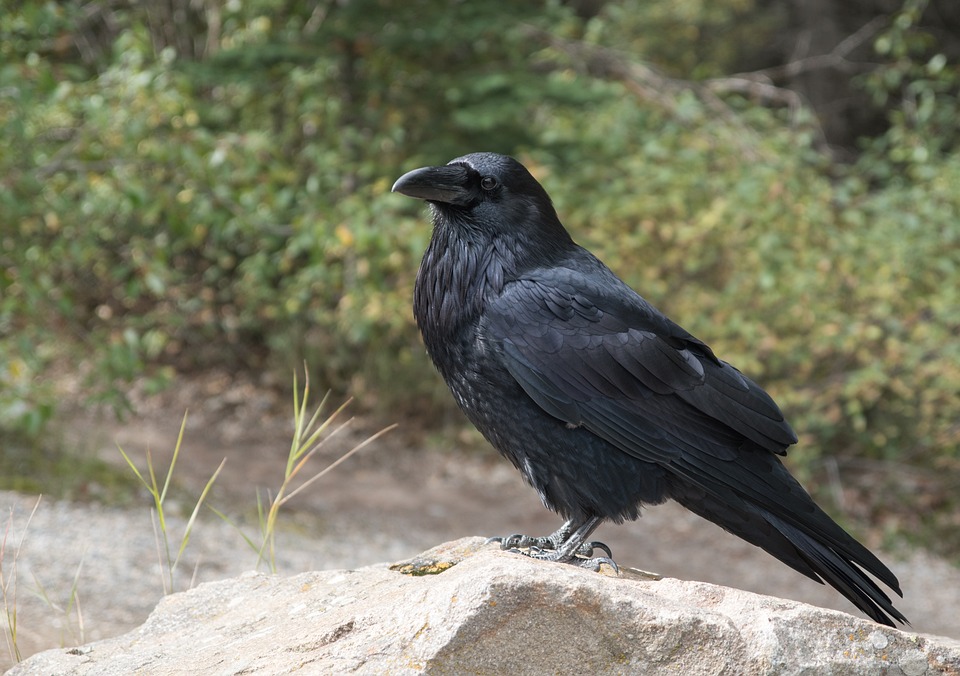
Yesterday mid-morning, quite by accident, The Farmer looks out the window in time to see about ten crows, in line, seemingly leaving a coop—did he suddenly have poor sight or was it one of those day dreams that creep up on us when no one’s looking? Why would crows be all queued up coming from inside a chicken coop? Crows! Well, we certainly do not like crows hanging around—and they have been around a lot lately—because they constantly scare off the chickens and eat their food, so he walks over there and, of course, they fly off. Well, he decided to collect the eggs before the brave egg thief came by – no eggs. Not one. Have the crows been stealing ALL our eggs? Not possible. But if not them, then who? Can they do it that neatly, unlike any other predators that have attacked the chickens—they always leave a blood bath, it’s sad to see. How do a few crows take so many eggs? How do they carry them? It just didn’t seem likely. As you can imagine, we’ve had quite a few questions so we turned to the University of Google to get some answers and here is some of what we found.
- Crows are clever and adaptive creatures that pose a significant challenge for farmers, particularly those who rear poultry or maintain aviaries, as they habitually raid nests to prey upon the vulnerable eggs and chicks of other bird species;
- During their breeding season, which is between spring—now—and early summer, crows are especially vigilant in their search for easy meals for their babies, making nests and poultry and corn farms prime targets;
- Crows are diurnal—new word for me 😊—creatures as they are primarily active during daylight hours. Early morning and late afternoon are typically their most active periods—explains the daylight robbery!;
- Crows have a mob mentality and unite for success in their devilish missions. Apparently, they are highly social birds that demonstrate remarkable cooperative behavior, especially when it comes to hunting for food. This collective strategy, known as mobbing, is often employed to increase their chances of overwhelming the parent birds and successfully stealing their eggs or precious offspring. What bullies!;
- When a crow discovers a food source, it emits a distinct alarm call, a signal, that summons its mob friends. The other crows, recognizing the alarm call, quickly respond by flying towards the location of the signal. As more crows come to the scene, their collective numbers create a large, dark cloud that scares the parent birds enough to cause them to abandon their nests, which allows the crows to help themselves to anything that’s in the nests;
- Crows work together, with synchronized coordination. Some crows, usually the smaller-sized ones, act as lookouts perching near the home that they want to steal from—we have witnessed these birds perched on the coops roofs and in trees and thought they were just doing “every bird’s thing”. These young‘uns keep a watchful eye for any approaching threats or disturbed adult birds—dear Reader, it is interesting to see how roosters and turkeys act when the chickens are threatened but that is a story for another day. The remaining crows then take turns swooping down to the nest, snatching eggs or chicks in their beaks, and swiftly retreating to a safe distance. The sentinel crows provide warnings to the other crows, if there is an imminent threat, allowing them to adjust their tactics accordingly—tactics, huh? So that’s how we were tactfully robbed?
- OK, all this tactical, organized crime is well understood but how do the crows manage to carry all the eggs out of coops without breaking them? Apparently, these cunning avian thieves have an ingenious technique that allows them to transport eggs safely. Their strong beaks are designed to handle a variety of tasks. When carrying eggs, they use a delicate grip that ensures that the eggs remain intact. By positioning the egg lengthwise in their beak, with the pointed end facing backward, crows are able to balance the weight and maintain a firm grasp on the eggshell (blah blah, blah..). Furthermore, an egg is naturally designed to withstand pressure from above while being relatively fragile when subjected to lateral forces (let’s get technical 😊). Crows take advantage of this by exerting a gentle but secure grip on the egg, avoiding any unnecessary pressure on its sides. By doing so, they minimize the risk of cracking or breaking the egg during robbery, oops! transportation. Are crows really this clever?
- We see how open nests in trees and eggs laid on the open ground are an easy feat for these black-feathered thieves but how do they “swoop” into, and out of, a little building? Crows are skilled at identifying vulnerabilities in structures and exploiting them to gain entry. Small gaps, cracks, or open windows provide them with potential access points. They may also exploit existing damage or weaknesses in the building’s structure to create larger openings that allow them to slip inside. Their flexible bodies enable them to navigate through tight spaces that might appear too small at first glance. We still do not have a clear answer on how they ‘swoop’ in and out but we can see that our coops, with their chicken doors left open all day to allow the chickens to go in whenever they need to lay eggs, provide an easy opportunity for these schemers to take, take, and take all day long;
- Last question (which should have probably been the first 😊), how did the crows know that there were eggs in an enclosed space? We are learning that crows have very sharp vision and an excellent ability to recognize shapes and colors, allowing them to identify nests and eggs even from a distance. As well, they have excellent observational skills and are quick to notice signs of nesting activity, including behaviors and sounds of other bird species that may indicate the presence of eggs. For example, the repeated visits of adult birds to a specific building, the sounds of chirping chicks, and remnants of eggshells in an area can all attract the attention of crows—Plus (probably), our chickens scream like banshees when they lay their eggs. Darn animals do not realize that they are beckoning the enemy! Anyhow, all these cues prompt the crows to investigate further, using their keen sense of sight and hearing to determine the location of the nest;
- Crows have remarkable memory and learning abilities and once they discover a successful target, they remember its location and will return to it in search of more, for as long there is food—darn birds! They also “share information” about food sources, which attracts other murders of crows to the bounty;
- Interestingly, crows’ presence on a farm can serve as an unintended line of defense against other predators. Their territorial nature and aggressive behavior often deters potential threats such as hawks, owls, and snakes from venturing too closely. We have witnessed this as we do not see many hawks flying around lately—and to think that we were so relieved when we thought the bad hawks’ had moved on to greener pastures and we were one less predator to worry about!
Now that we have all this interesting information, other than sitting by the coops all day—not realistic—or collecting eggs every hour, which, with life happening, is going to be impossible many times, how are we supposed to protect our eggs? Well, below are some of the UoG’s suggestions:
- Securing buildings and/or put up physical barriers, sealing off any potential entry points to prevent crows from gaining access to the nests—but how do we do this when the chickens need to walk in and out of their coops whenever they need to?;
- Using scare tactics like scarecrows, reflective tape and shiny material like CDs and windchimes, or noise-emitting devices in a bid to deter crows by creating an environment that appears unsafe or unfamiliar—seeing as these creatures are super observant, for how long will this ruse work? As well, wouldn’t these tactics also work in scaring the very animals that we are trying to protect?
- Attracting natural predators that prey on crows, such as owls or falcons, to help keep the crow populations in check—ok, we are now exchanging the eggs thief for chicken predators, C’mon! Who said free range farming was easy? 😊
So, while not exactly at “back to square one”—and we are glad-ish that we potentially identified the egg thieves and that they are not “whos” but “whats” (I’m still a bit skeptical 😊)— we have so many new questions, especially, how do we realistically get rid of the problem? Dear Reader, we have no idea but will update you when we get a light bulb moment, or several 😊. Until then, thank you for reading, keep the crows away from you 😊, and God bless you!
4 thoughts on “Someone’s Stealing Eggs? 🤷♀️”
Dear FinnFarmers, you have left your audience in suspense for far too long.
Whatever solution did you apply to the Scourge of crows?
Curious,
K
You are right, Curious K, we’ve, regretfully, kept the audience in suspense too long (Life!). Unfortunately (sometimes, fortunately–read on!!), the crows are still here. We have learnt that when we starve them, they do not hang around in droves. Accordingly, we have taken to (1) letting the chickens out a little later and (2) collecting the eggs more frequently during the day. Then, the crows do not have easy food and have to find other sources away from here. We have observed, though, that there are fewer/no hawks when the crows are around–talk about one predator being a blessing! The lessons we learn on the go!
Thank you for reaching out and God bless you!
Crows! Who knew! While this “organized crime” is concerning, the wit with which it was written makes it quite hilarious. We hope you get that light bulb moment real soon because we need our eggs! This blog has presented a teachable moment for me, thank you!
That is really very kind, thank you. And thank you for reading and for supporting Finn Farms always!